
Sleep, Stress and Performance: The Overlooked Connection
The two variables most men never think to examine are the two that quietly set the baseline everything else works from.
When erections become unreliable, the search for a cause usually starts with age, weight or the relationship. Sleep and chronic stress rarely make the list, which is unfortunate, because they act on the same machinery as every other cause and they are two of the few inputs a man can change inside a fortnight.
Testosterone is made mostly while you are asleep
Testosterone follows a daily rhythm with its peak in the early morning, and the bulk of the day's production occurs during sleep — particularly during the deeper stages and during REM. This is not a small effect. In controlled studies where healthy young men were restricted to around five hours in bed for a single week, daytime testosterone fell by roughly ten to fifteen per cent, which is comparable to aging ten to fifteen years.
Critically, it is not just total hours. Testosterone production tracks sleep continuity. Eight hours broken into four two-hour fragments does not deliver what eight consolidated hours delivers, because the deeper stages that matter mostly occur in long uninterrupted runs.
Testosterone is not the direct driver of erection hardness — that is a vascular question — but it strongly influences desire, morning erections and the frequency of spontaneous ones. Men with sleep debt tend to describe reduced interest first and mechanical difficulty second.
Cortisol works directly against the mechanism
Cortisol rises with both psychological stress and sleep restriction, and it also has a daily rhythm that short sleep flattens and elevates. Chronically raised cortisol suppresses the signalling that drives testosterone production, so the two effects compound rather than simply coexist.
Stress also raises sympathetic nervous system tone, and sympathetic activity constricts the penile arteries. As covered in the article on blood flow, an erection depends on those arteries relaxing. A man running high sympathetic tone all day is starting each attempt from a more constricted baseline — less margin available before anything else has gone wrong.
Sleep apnoea deserves a specific mention
Obstructive sleep apnoea has an unusually strong association with erectile dysfunction, and the overlap is far higher than chance. The mechanism is plausible on several fronts at once: repeated oxygen desaturation damages endothelial function, fragmented sleep suppresses testosterone, and the associated sympathetic surges raise blood pressure over time.
If you snore heavily, wake unrefreshed after adequate hours, or have been told you stop breathing at night, this is worth investigating on its own merits — erections are the least of what untreated apnoea affects. Men who are diagnosed and treated frequently report improvement in erectile function alongside everything else.
The feedback loop that keeps it going
The unpleasant part is that the relationship runs both ways. Poor sleep and stress make erections less reliable. Unreliable erections generate worry. Worry degrades sleep quality and raises baseline stress. Each turn of the loop makes the next turn slightly worse, and none of the individual steps feels dramatic enough to notice.
Men often break this loop from the medication side, and that is a legitimate entry point: removing the evidence that feeds the anxiety lets the anxiety settle. But the loop can also be broken from the sleep side, and doing both at once tends to be faster than either alone.
What actually works, in rough order of return
A fixed wake time. Not a fixed bedtime — a fixed wake time, seven days a week. Wake time anchors the circadian clock far more strongly than bedtime does, and bedtime eventually follows it. This is the single highest-yield change and it costs nothing.
Alcohol at least three hours before bed, and less of it. Alcohol reduces sleep latency and then suppresses REM and fragments the second half of the night. It is one of the most common reasons for eight hours in bed producing five hours of useful sleep. Its acute effect on erections is covered in a separate piece.
Morning daylight within an hour of waking. Ten to fifteen minutes outdoors sets the circadian signal that determines when melatonin rises that evening. Indoor lighting is roughly a tenth as strong and does not substitute.
A cool, dark room. Core temperature has to drop for sleep to consolidate. A room in the region of eighteen degrees Celsius helps that happen; a warm room actively works against the deeper stages.
Caffeine curfew at eight hours, not four. Caffeine's half-life is around five to six hours, so a four o'clock coffee still has a meaningful fraction circulating at midnight. It may not stop you falling asleep and still reduce deep sleep.
Deliberate downshifting. Sympathetic tone does not fall on its own if the day never ends. Slow breathing with a longer exhale than inhale, a walk, or twenty minutes without a screen all shift the balance toward parasympathetic activity. Which method matters far less than doing something consistently.
How long before anything changes
Testosterone responds to sleep recovery within about a week — the studies that reduced it with restriction also showed it returning with recovery sleep. Subjective energy and libido often shift in the same window. Vascular improvements from stress reduction and better sleep take longer, in the range of weeks to months, because they depend on endothelial change rather than hormone levels.
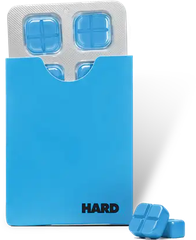
None of this makes prescription treatment unnecessary, and it is not offered as a substitute. HardRx addresses the vascular step directly and works on the timescale of a single evening. Sleep and stress work on the baseline that everything else operates from. Men who fix the baseline while treating the symptom generally get a better result than men who only do one.
Common Questions
Most adults need seven to nine hours, and the minority who genuinely function on less is very small. Consistency of timing matters alongside duration, because fragmented sleep does not deliver what consolidated sleep does.
Yes. Sympathetic nervous system activity constricts the arteries that need to relax, and chronic stress also suppresses testosterone through raised cortisol. Stress-driven ED is physical in mechanism even when psychological in origin.
They suggest the vascular and nerve pathways are functioning, which is useful information. Their absence over a sustained period is worth mentioning to a clinician, as is a sudden change in their frequency.
It may reduce how often you want it, particularly if sleep debt or apnoea was a significant contributor. That varies by individual and there is no way to predict it in advance.
Ready when you are
A five-minute assessment, a licensed physician, and free discreet delivery.
Safety & Important Information
Take only the dose you were prescribed, and never more than one in any 24-hour period. HardRx is not suitable if you take nitrates or have certain heart conditions. Side effects are usually mild and may include headache, flushing, dizziness or nasal congestion. Nothing on this page replaces professional medical advice — read the full safety information before ordering.
Take Control Today With HardRx
More performance. More confidence. A better you.